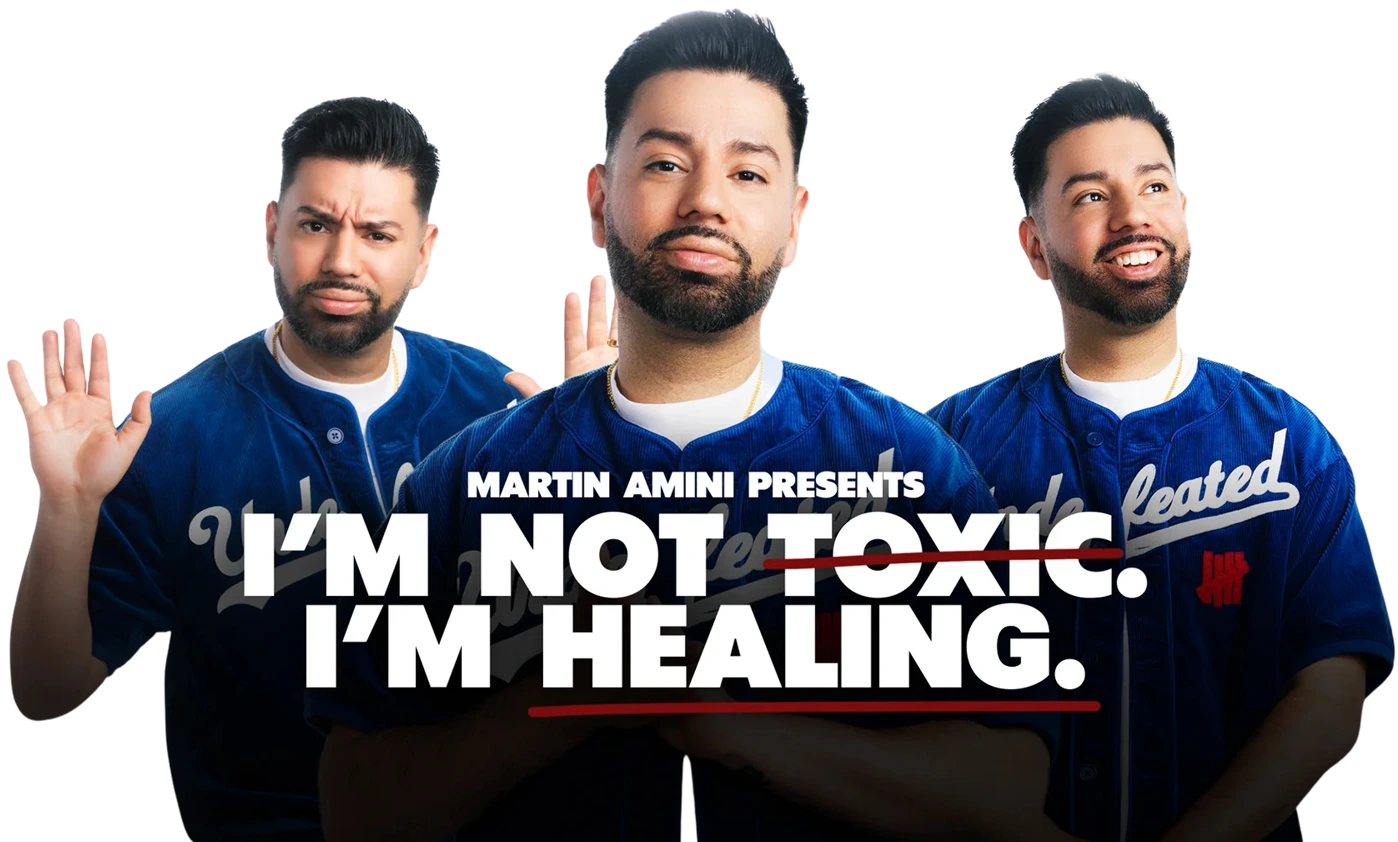
 About Martin
 About Martin
Iranian-American Comedy: Martin Amini and the New Wave
A Generation Finding Its Voice
Iranian-American comedy didn't exist as a recognized category twenty years ago. Not because Iranian-Americans weren't funny — anyone who's spent time around an Iranian family knows that humor is embedded in the culture, a survival tool developed across centuries of political volatility and diaspora — but because the structures of American entertainment weren't set up to amplify those voices in mainstream contexts.
That's changed. The iranian american comedian has become a recognizable figure in contemporary comedy, and Martin Amini is among the most prominent examples of a generation of performers who grew up between cultures and turned that position into art.
The Iranian Comedy Tradition
Persian humor has deep roots — satirical poetry, sharp social observation, the particular kind of gallows humor that emerges when a culture has survived as much as Iranian culture has survived. The comedy tradition isn't incidental to Iranian culture; it's structural. Humor as a way of processing difficulty, of expressing things that can't be said directly, of creating intimacy in difficult circumstances.
Second-generation Iranian-Americans carry that tradition into a different context. The humor that worked in Tehran gets translated into Silver Spring or Los Angeles or Chicago, filtered through American cultural references and then brought back into conversation with its origins. The result is a comedic sensibility that's genuinely bicultural — drawing from both wells rather than abandoning one for the other.
Martin Amini's Place in the Scene
Martin Amini's iranian american comedy is distinctive for several reasons. The Iranian-Bolivian combination is rare — most Iranian-American comedians draw from the Iranian-American experience in more conventional form, shaped by the large Persian communities in Los Angeles and New York. Martin grew up in Silver Spring with a Bolivian mother, which means his cultural navigation is triangulated rather than bilateral. He's not just translating between Iranian and American; he's working between three distinct worldviews simultaneously.
That complexity produces material that doesn't fit standard templates. He's not doing the Persian parents jokes that audiences who grew up around Iranian families have heard a hundred times. He's doing something more specific and, as a result, more universal — because specific observations about real complexity land harder than generalizations about cultural types.
The New Wave: Who Else Is in It
Martin Amini isn't alone in this generation of Iranian-American comedy. The past decade has seen a significant number of performers of Iranian descent building careers in American stand-up, with material that engages the diaspora experience in ways ranging from explicitly political to broadly cultural to personal and domestic.
What distinguishes the current wave from previous generations of immigrant comedy is the refusal to be defined primarily by the immigrant experience. These comedians are Iranian-American, yes — that background shapes their material — but they're also comedians first, performing for general audiences who respond to the work on its own terms rather than as ethnic representation. The comedy is good because it's good, and the cultural context is part of what makes it good rather than the whole reason to engage with it.
Why This Moment
The visibility of Iranian-American comedy right now reflects broader shifts in American entertainment. Audiences have become more interested in specific perspectives and less satisfied with the smoothed-out universalism that dominated mainstream comedy for decades. The comedy that lands hardest is the comedy that comes from somewhere — from a particular position in the world that's been examined honestly.
Iranian-Americans are among the most educated and professionally established immigrant communities in the United States, with significant cultural production across literature, film, music, and increasingly comedy. The generation that grew up after the 1979 Iranian Revolution brought large numbers of Iranians to the United States has reached the age where artists typically do their best work. The timing is not coincidental.
What Martin Amini's Success Signals
The fact that Martin Amini can sell out 50-city national tours with material rooted in Iranian-Bolivian-American experience signals something real about where American comedy is. Audiences who have never met an Iranian person laugh at his material because the human experiences he's drawing from are human experiences. The cultural specificity is the path to universality, not the obstacle to it.
For younger Iranian-American performers watching his career, the signal is clear: the specific is where the comedy lives. You don't have to generalize yourself to reach general audiences. Read about Martin Amini's Iranian-Bolivian background for more on how his specific heritage shapes the material.
See the Work
The best way to engage with Iranian-American comedy isn't to read about it — it's to watch it. Martin Amini's Transcending Tour is visiting cities across the US in 2026. Find a show near you and experience what a generation of specific, genuine, culturally grounded comedy sounds like from the inside of a room full of people laughing at the same time.
DON'T JUST READ ABOUT IT
See Martin Live in 2026
50 cities. The matchmaking bit. The full Transcending hour.
See Martin Live →